Visual Merchandising Trends for 2026: What Smart Retailers Are Already Planning For
Retail VM isn’t entering another trend cycle — 2026 is a reset year.
Not because customers suddenly changed overnight, but because the cracks have finally become impossible to ignore. Cost pressures are real. Teams are leaner. Sustainability scrutiny is sharper. And customers? They’re more selective, more impatient, and far less impressed by stores that feel like warehouses with price tags.
The retailers getting traction right now aren’t chasing gimmicks. They’re rebuilding their visual merchandising playbook around flexibility, clarity, and experience — with VM treated as a commercial tool, not decoration.
Below are the visual merchandising trends for 2026 that are already shaping store concepts, rollouts, and refits globally — and what smart retailers should start doing now, not next year.
Why 2026 Is a Reset Year for Retail Visual Merchandising
The last few years forced retailers into survival mode. VM became reactive: fewer installs, more reuse, faster turnarounds, less polish.
What’s changed now is intent.
Retailers aren’t asking “How do we do more?”
They’re asking “What actually moves the needle?”
That shift is driving a new generation of retail visual merchandising — one that values:
Experience over excess
Flexibility over permanence
Story over stock
Design that earns its footprint
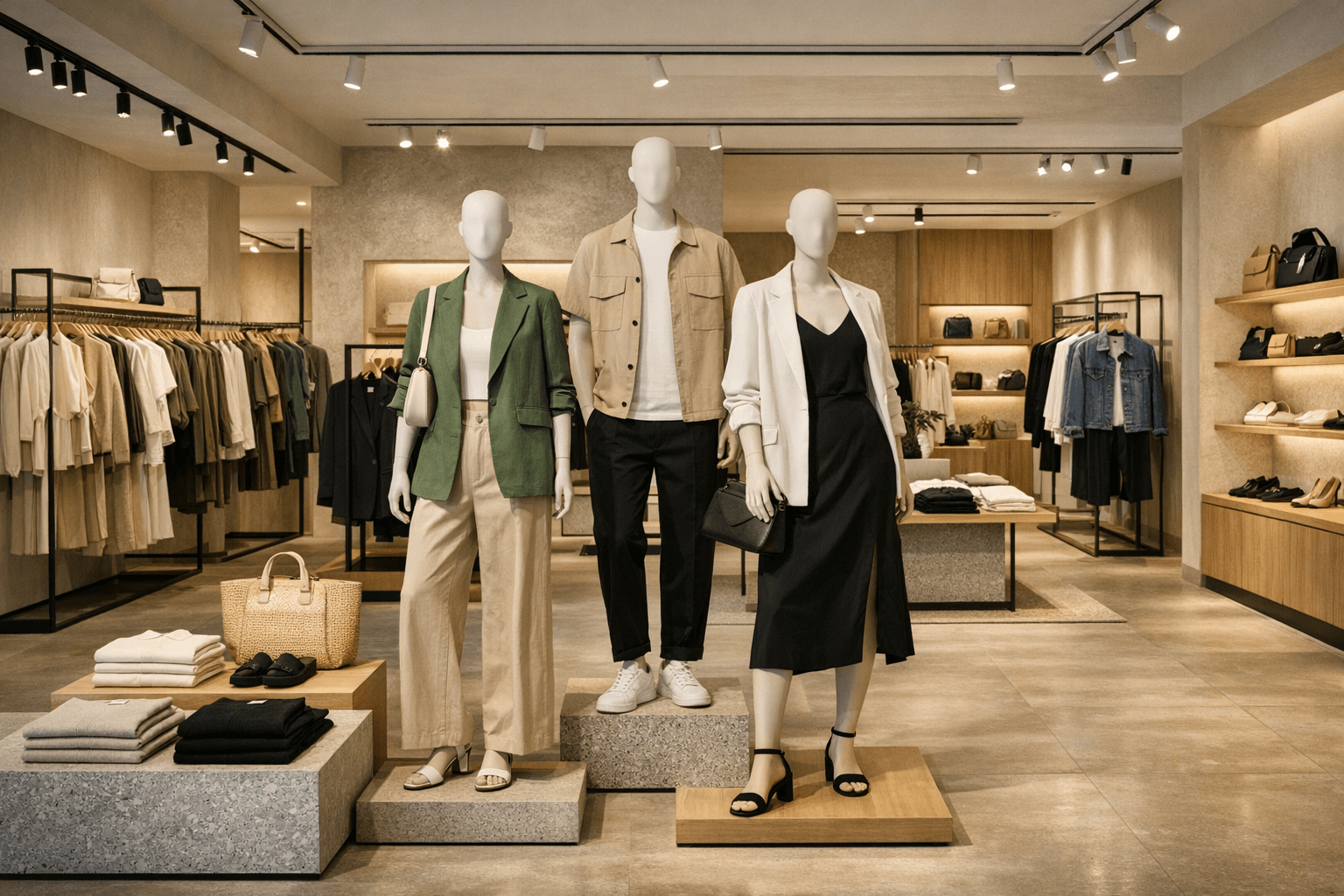
A 2026-ready unisex fashion store using experience-led visual merchandising, balanced product density, and modular fixtures to drive both storytelling and sales.
1. Experience-Led Merchandising Over Product Density
What’s changing
High-density product walls are losing their impact. Shoppers don’t want to decode your range — they want to understand it fast.
Why it matters in 2026
Attention spans are shorter, store visits are more intentional, and customers expect a reason to step inside that they can’t get online.
What to do now
Edit harder — hero products outperform clutter
Build zones that invite pause, not just browsing
Design displays that answer “why this, why now?” instantly
Bottom line: Experience doesn’t mean theatre everywhere — it means clarity with emotion.
2. Modular, Flexible Fixtures Built for Constant Refresh
What’s changing
Static fixtures that lock you into one layout are being phased out.
Why it matters in 2026
Budgets are tighter, but refresh frequency is higher. VM teams need to pivot weekly, not quarterly.
What to do now
Invest in modular systems that reconfigure without tools
Design fixtures to scale up or down by location size
Prioritise components that travel well between stores
Smart retailers design fixtures like toolkits — not monuments.
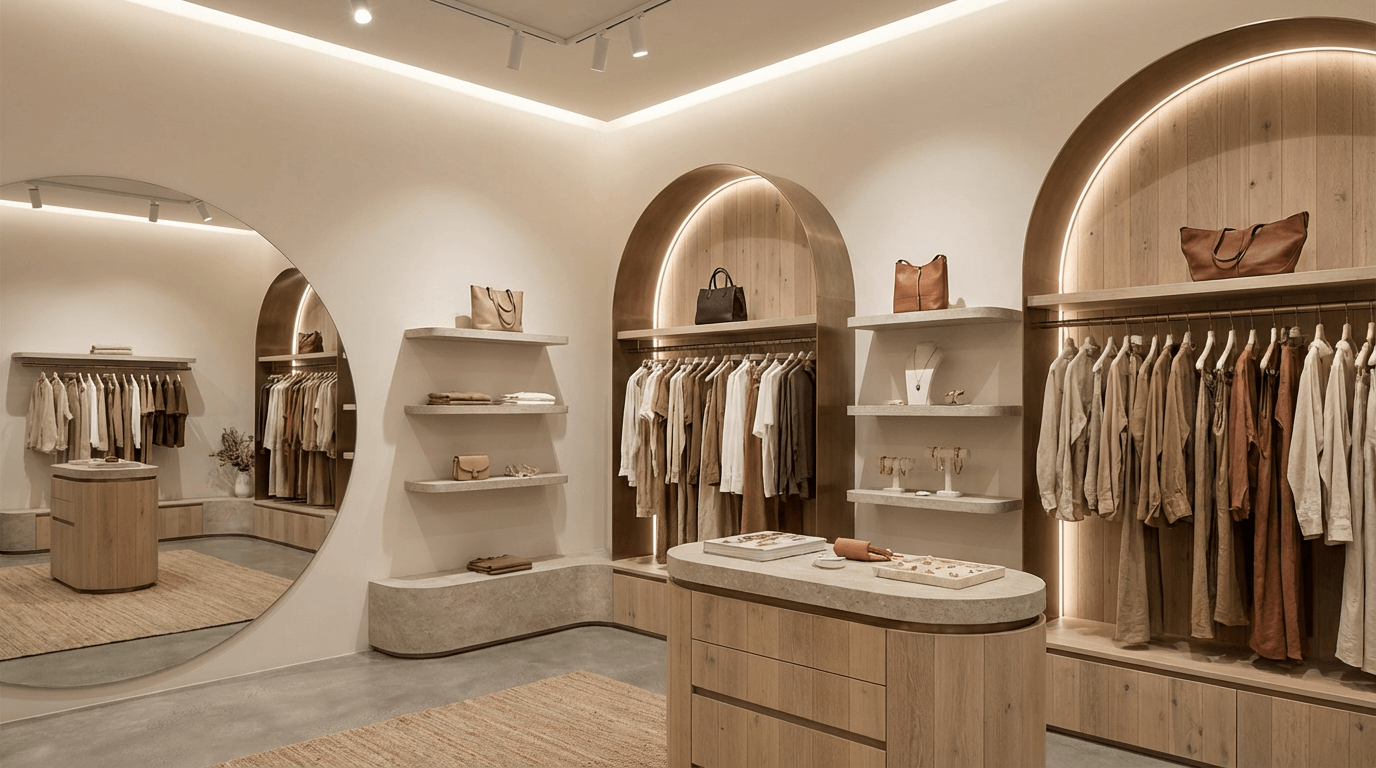
A contemporary high street ladies boutique interior where sustainability is expressed through premium materials, refined detailing, and thoughtful visual merchandising — warm, elevated, and commercially credible.
3. Sustainable Materials With a Premium Finish (Not Raw-for-the-Sake-of-It)
What’s changing
Raw plywood and “look-we’re-eco” aesthetics are wearing thin.
Why it matters in 2026
Customers are sustainability-literate now. They expect responsibility without sacrificing brand quality.
What to do now
Choose recycled or low-impact materials with refined finishes
Design longevity into props so they last multiple campaigns
Communicate sustainability subtly through material choices, not signage overload
Sustainability should feel intentional — not apologetic.
4. AI-Assisted Planning + Human Storytelling In-Store
What’s changing
AI is influencing planning, forecasting, and layout testing — but not replacing VM instincts.
Why it matters in 2026
Retailers who use AI behind the scenes gain speed and accuracy, while human-led storytelling keeps stores emotional and relatable.
What to do now
Use AI tools for range planning and space optimisation
Let VM teams focus on narrative, flow, and emotion
Avoid over-automating the in-store experience
Tech should support the store — not become the store.
5. Localised VM Over One-Size-Fits-All Rollouts
What’s changing
Centralised rollouts are being adapted, not blindly copied.
Why it matters in 2026
Customers can spot generic retail instantly. Local relevance builds trust and connection.
What to do now
Design VM toolkits with local flexibility baked in
Allow stores to tweak hero stories within brand guardrails
Use local data to inform product focus and messaging
Consistency is important — but relevance wins.
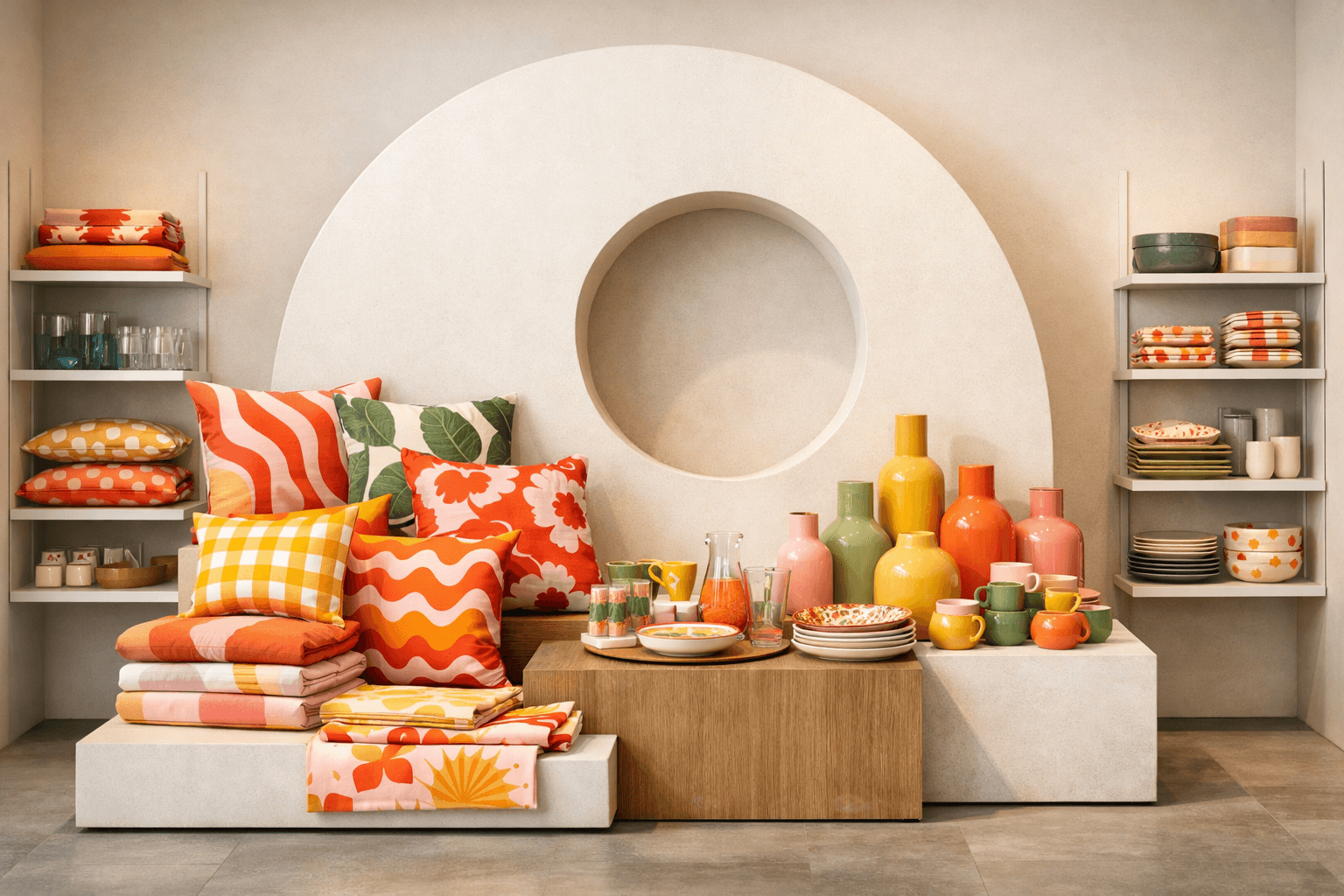
Colour-led homewares display using curated product groupings and a sculptural focal point to create impact without clutter — a confident, commercial approach to high-street visual merchandising.
6. Fewer Props, Stronger Statements
What’s changing
Over-propping is out. Purposeful hero pieces are in.
Why it matters in 2026
Every element in-store now needs to justify its cost, footprint, and install time.
What to do now
Replace multiple small props with one strong focal point
Design props that work across categories or seasons
Think sculptural, not decorative
If it doesn’t amplify the story, it’s just visual noise.
7. Lighting as a Primary Design Tool (Not an Afterthought)
What’s changing
Lighting is moving from technical spec to creative strategy.
Why it matters in 2026
Lighting shapes mood, directs traffic, and elevates product — often more effectively than props.
What to do now
Layer lighting: ambient, accent, and feature
Use warmth and contrast to guide customer flow
Design lighting plans alongside VM concepts, not after
Good lighting sells quietly — and consistently.
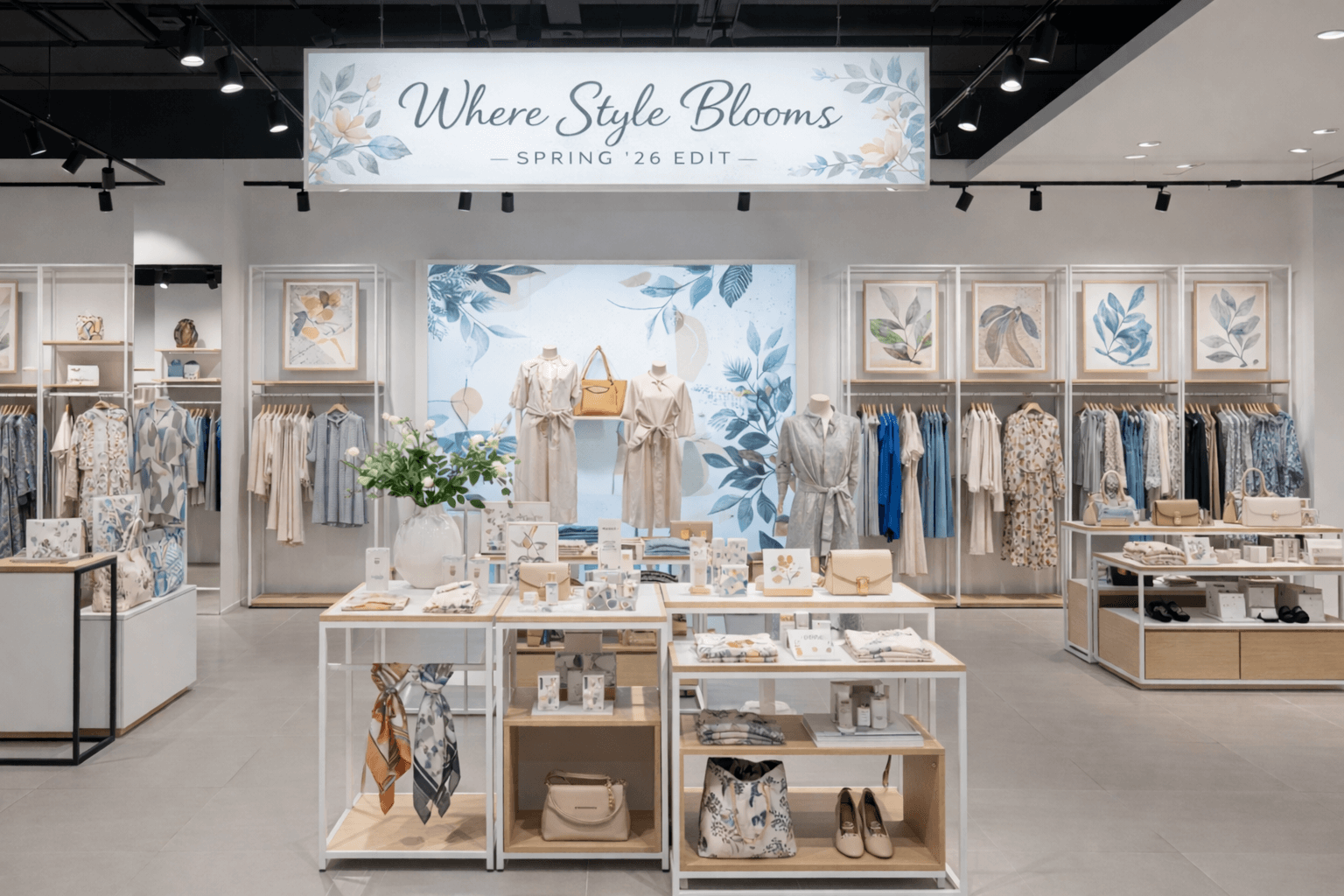
A refined Spring ’26 in-store edit where soft florals, flowing typography, and curated fashion collections come together — proof that strong visual merchandising can feel calm, commercial, and quietly confident.
8. Content-Ready Displays for In-Store + Social
What’s changing
Displays are now designed to live beyond the store.
Why it matters in 2026
If a display isn’t photographed, shared, or filmed — it’s underperforming.
What to do now
Build “moment zones” with clean sightlines
Design with vertical and horizontal framing in mind
Ensure branding reads clearly on camera
Your store is content — whether you plan for it or not.
What to Stop Doing in 2026 (Let’s Be Honest)
Stop filling space just because it exists
Stop designing VM that only works once
Stop defaulting to global rollouts without local sense checks
Stop treating lighting as a budget line to cut
Stop confusing sustainability with unfinished design
How Retailers Can Prepare for 2026: A Practical Checklist
✔ Audit fixtures for flexibility and reuse
✔ Reduce SKU density in key storytelling zones
✔ Align VM, store design, and marketing earlier
✔ Invest in lighting upgrades before new props
✔ Build VM toolkits, not rigid planograms
✔ Design every display with camera-readability in mind
Final Thought: VM Is a Commercial Tool, Not Decoration
The future of retail design isn’t louder, bigger, or more complicated.
It’s smarter.
Visual merchandising in 2026 will belong to retailers who understand that VM isn’t about making stores look good — it’s about making them work harder, last longer, and connect faster.
The brands winning in-store aren’t chasing trends.
They’re building systems that adapt, stories that resonate, and environments customers actually want to spend time in.
That’s not decoration.
That’s strategy.
Ready to Plan Smarter Visual Merchandising for 2026?
If you’re reviewing stores, planning new windows or questioning whether your current visual merchandising is actually pulling its weight, now’s the right time to step back and reassess.
I work with retailers through Troy Ware Creative to create visual merchandising strategies and store concepts that are:
Commercially focused
Flexible and future-ready
Designed to work in the real world — not just on paper
If you’d like a tailored perspective, connect with us and we’ll look at where your visuals can work harder in 2026.
🌐 Website: troywarecreative.com
OR
📩 Email: hello@troywarecreative.com